Behind the Brand: Custom Fingerboard Production
Fingerboarding has exploded beyond a niche pastime into a lively subculture with its own aesthetics, events, and makers. What began as a bedroom hobby—plastic decks, cardboard ramps, and endless practice sessions—has matured into a global community that values creativity, craftsmanship, and shared enthusiasm. That growth has changed the hobby’s landscape: fingerboarding is now a medium for personal expression, a small-business ecosystem, and a social glue that connects people across generations.
Why the scene is growing
Accessibility: Fingerboarding requires minimal space and affordable gear, making it easy for beginners to start. The low barrier to entry attracts diverse participants—from kids discovering skate culture to adults revisiting a lost pastime.
DIY ethos: The community thrives on customization. Builders craft pocket ramps, mod decks, and bespoke obstacles, while artists design tiny graphics and stickers. This maker spirit keeps the scene vibrant and continually evolving.
Online culture: Social media and niche forums have been crucial. Short-form video platforms amplify tricks, tutorials, and mini-park tours; threads and groups foster gear swaps, collaborative builds, and local meetups.
Competition and progress: Local jams, online contests, and signature trick challenges provide motivation. Progression—landing a trick cleanly, nailing a line, or winning a local jam—drives participation and skill-sharing.
Cross-generational appeal: Fingerboarding taps into nostalgia for analog toys while embracing modern content creation. Parents and teens often share the hobby, passing on techniques and tastes.
Community rituals and values
Jams and swap meets: Local gatherings, often informal, let riders test gear, learn tricks in person, and trade parts. These events are equal parts social hangout and makerspace.
Customization as identity: Deck graphics, grip tape choices, and modded trucks form visual language. Enthusiasts express influences—skate culture, punk, vaporwave, and vintage design—through miniaturized art.
Respect for craft: Builders and artists gain recognition for precision: hand-cut decks, custom shapes, or accurately scaled graphics. Skill is respected whether it’s a flawless flip trick or a beautifully built mini-park.
Documentation and celebration: Video edits, photo zines, and small-run zines chronicle the scene. They celebrate skill, tell maker stories, and spread design ideas across communities.
The hobby’s continued growth opens room for innovation: modular parks, higher-fidelity scale boards, and collaborations between fingerboard makers and designers. As creators push materials and aesthetics, fingerboarding increasingly resembles a micro-industry of collectors, builders, and content creators who sustain each other.
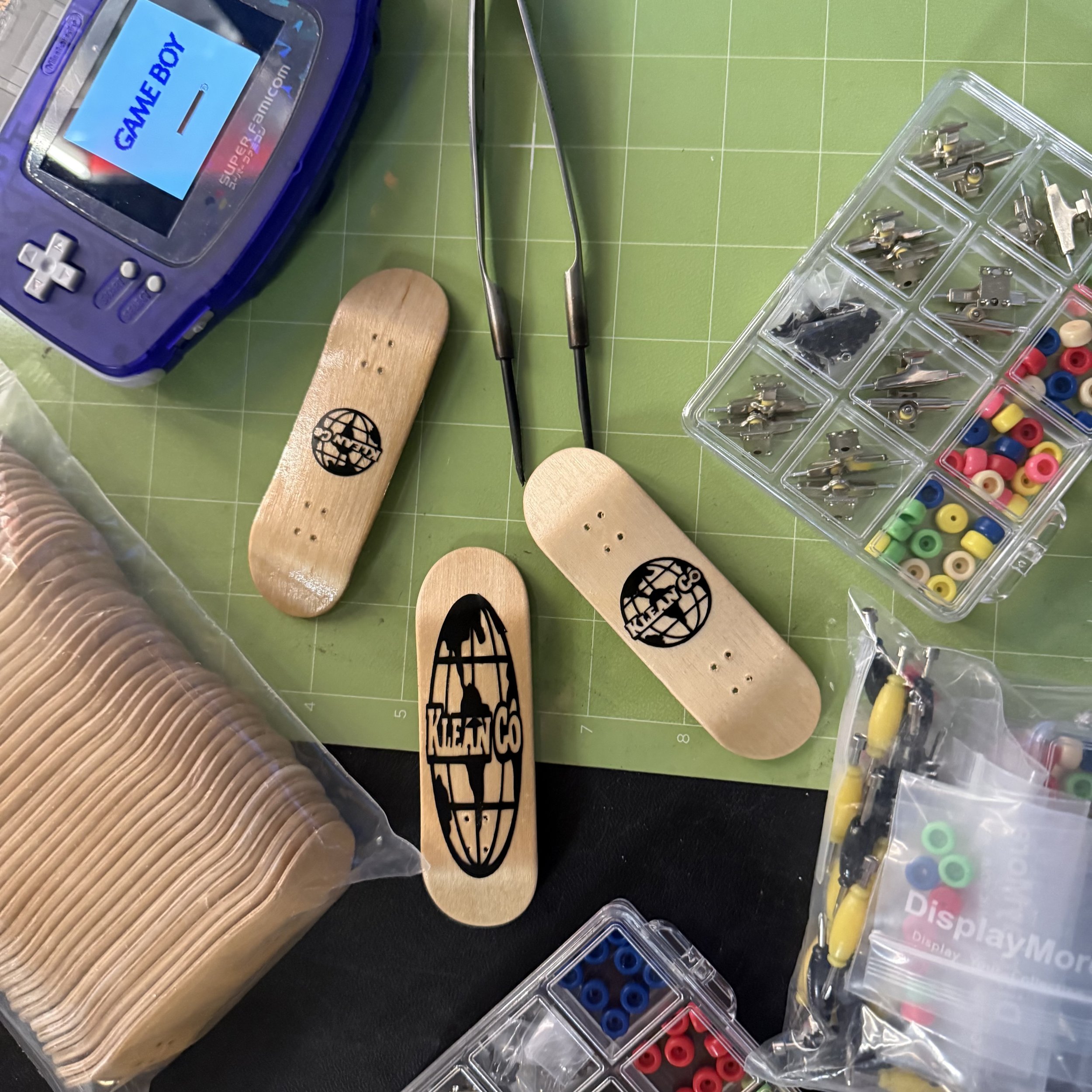
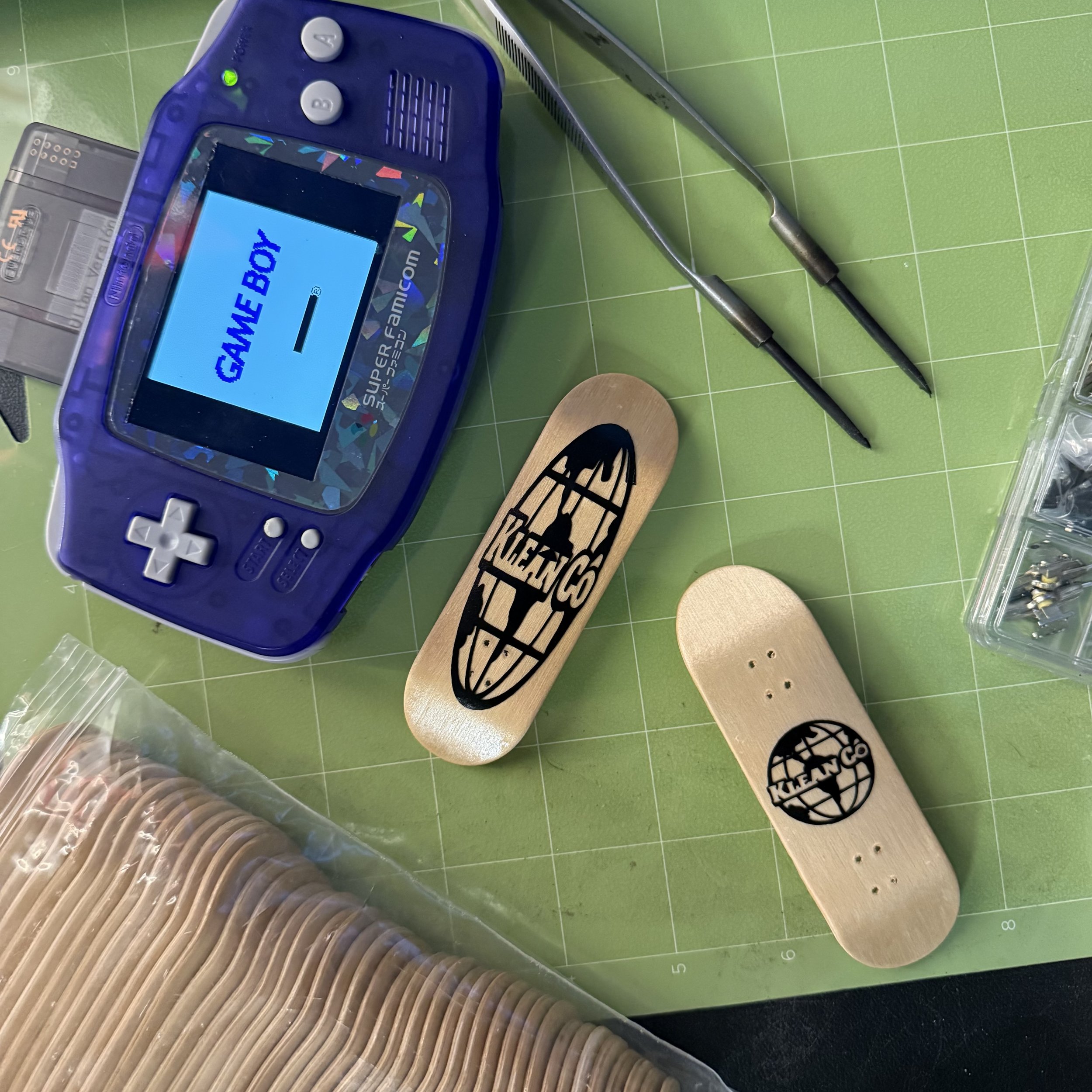
We’ve loved fingerboarding for years. Its mix of DIY creativity, scaled-down design thinking, and countercultural aesthetics aligns with our studio’s interests. That appreciation led us to bring custom fingerboards back into the shop. Our approach blends nostalgic references with contemporary design: carefully selected wood, handcrafted graphics, and mod-ready components so riders can personalize and push their setups.With all of that said… we are re-launching custom fingerboards orders!
Reissued custom fingerboards — hand-finished decks, vintage-inspired and modern art series, precision trucks, and swap-ready hardware. Limited runs, built for riding and collecting. Available now at our studio shop. Pick one up, mod it your way, and join the jam.